Let’s talk
Book a call with our team today!

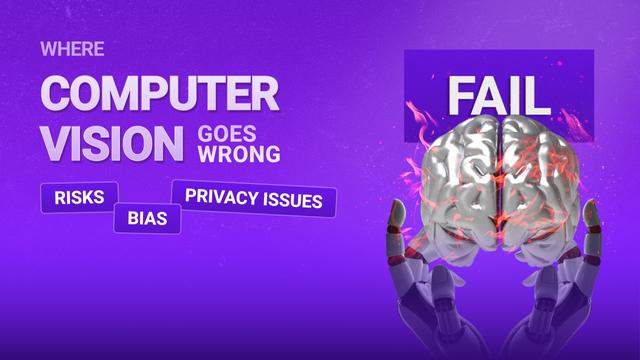
Where Computer Vision Goes Wrong: Risks, Bias, and Privacy Issues
Let’s talk about one of the biggest risks with computer vision – and it’s not the tech itself, it’s the data we feed it.
The problem? Bias. Not because AI is out to get anyone, but because it learns from whatever examples it’s given. If those examples aren’t diverse, the results can be seriously skewed.
Take facial recognition. If a system is trained mostly on light-skinned faces, it’s naturally going to perform worse on darker-skinned individuals. That’s not just a bug – that has real-world consequences, especially when this tech is used in policing, hiring, or security access.
Healthcare has the same issue. An AI trained on a narrow demographic might miss signs of illness that show up differently in other people. And when you apply computer vision to video interviews? You risk unfairly judging candidates based on things like accent, facial expressions, or cultural body language.
At the heart of it: bad training data. If an AI doesn’t see something in its training it doesn’t know it exists. When it sees it in the real world, it won’t know what to do. Poor data can introduce unintentional biases that reinforce rather than eliminate inequalities.
When Accuracy Failures Have Serious Consequences
Not all mistakes are small - sometimes they’re dangerous. If self-driving cars were to miss a stop sign, or didn’t notice a pedestrian, then that can easily turn into a life-or-death situation. If a medical tool fails to spot early cancer signs – or wrongly flags them – then that could delay treatment or lead to unnecessary panic. If a security system misidentified someone, it could block their access to a building… or worse, lead to a wrongful arrest.
Let’s talk
Book a call with our team today!