Let’s talk
Book a call with our team today!

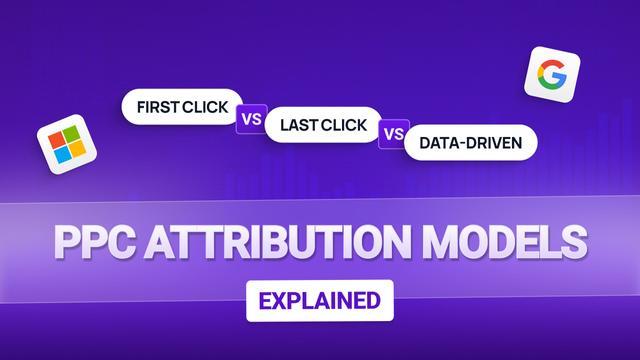
PPC Attribution Models Explained: First Click vs Last Click vs Data-Driven
Attribution models determine which touchpoints get credit for conversions… and this directly affects how you allocate budget. Looking only at last-click attribution might kill campaigns early - even ones that are actually driving awareness and starting customer journeys. Understanding different models helps you make smarter spending decisions.
Core Attribution Models
Last-click attribution gives all credit to the final touchpoint before conversion - if someone clicks a display ad, then a search ad, then converts, only the search ad gets credit. This model is simple but often misrepresents the customer journey.
First-click attribution gives all credit to the initial touchpoint. Using the same example, the display ad would get all the credit. This model is great for tracking awareness campaigns but ignores the campaigns that actually close the sale.
Linear attribution spreads credit equally across all touchpoints. Each interaction gets the same credit regardless of when it happened. This gives you a more balanced view but doesn't account for the fact that some touchpoints are naturally more influential.
Time decay attribution gives more credit to recent interactions. Touchpoints closer to the conversion get more credit than earlier ones. This model recognizes that recent activity is usually more influential in driving immediate conversions.
Data-driven attribution uses Google's machine learning to analyze your actual conversion paths and assign credit based on how much each touchpoint actually contributed. This is the most sophisticated model and often the most accurate.
Why Attribution Matters for Budget Allocation
Your attribution model directly affects campaign performance reporting and budget decisions. If you use last-click attribution, your awareness campaigns will look terrible - they rarely get credit for final conversions. This leads to cutting budgets from campaigns that are actually driving valuable top-of-funnel activity.
Let’s talk
Book a call with our team today!