Let’s talk
Book a call with our team today!

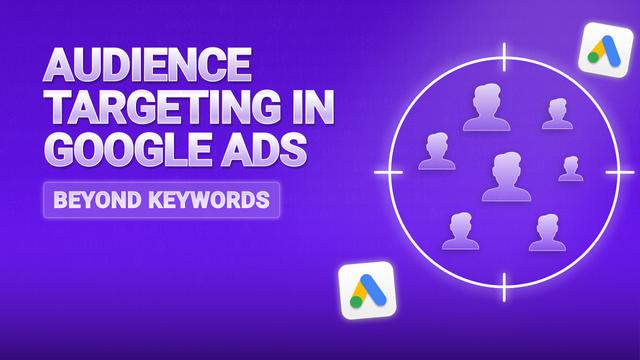
Audience Targeting in Google Ads (Beyond Keywords)
Keywords get people to click your ads, but they don’t make sales – audiences determine whether those clicks turn into customers. Savvy advertisers layer audience data on top of keyword targeting – not only does it improve efficiency, it reduces wasted spend. You can use Google’s audience targeting to make your ads more profitable – and here’s how.
Understanding Different Audience Types
In-market audiences target people actively researching products or services in your category – Google identifies these users based on their recent search behavior and website visits. If you sell running shoes, you can target people in the "Athletic Apparel" in-market audience.
Affinity audiences reach people with long-term interests related to your business. These audiences are broader than in-market but help with awareness campaigns. A fitness equipment company might target "Fitness Buffs" or "Health & Fitness" affinity audiences.
Custom intent audiences let you create your own audience based on specific keywords and URLs. You can build an audience of people who searched for "best email marketing software" or visited competitor websites.
Remarketing audiences target people who have already interacted with your business – they’re a warmer audience. Create audiences for website visitors, people who viewed specific product pages, cart abandoners, or past customers. These warm audiences typically convert at much higher rates.
Customer match allows you to upload your CRM or email lists to target existing customers or prospects. You can create lookalike audiences based on your best customers to find similar people who are likely to convert.
Applying Audiences Strategically
Use audiences as "targeting" to restrict who sees your ads, or as "observation" to gather data without limiting reach. Targeting narrows your audience but may reduce volume. Observation lets you see performance differences between audience segments.
Let’s talk
Book a call with our team today!