Let’s talk
Book a call with our team today!

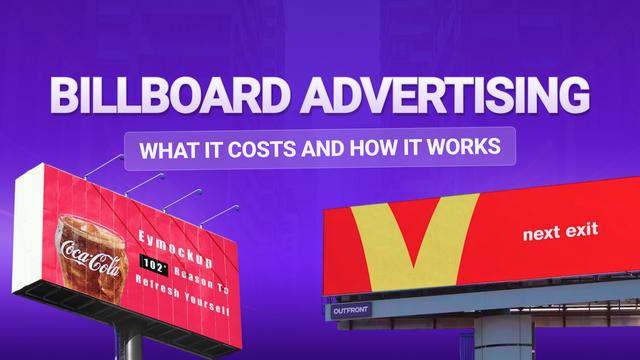
Billboard Advertising: What It Costs and How It Works
If you think “outdoor advertising,” you’re probably thinking of billboards. And for good reason — they're the most iconic form of outdoor media. But here's what surprises people: billboard advertising is way more accessible than you might think. You don’t need a Fortune 500 budget!
Let me break down billboard advertising — let’s talk what it costs, how it works, and why it might be perfect for your next campaign.
Types of Billboards: Static, Digital, and Everything Between
There are three main types of billboards you'll encounter. Static billboards are your traditional printed vinyl displays. Once they're up, they stay the same for the entire campaign period. These are the most affordable option, typically running 1,600 to 6,000 dollars for a four-week period depending on location and size.
Digital billboards use LED screens to display your ad. The big advantage here is flexibility — you can change your message throughout the day or even run different ads for morning and evening commutes. You can comfortably budget 2000 to 8000 dollars monthly for digital billboards, but you're sharing that screen with other advertisers.
Here's how digital billboards work: your ad appears in a rotation loop, usually showing for 6 to 10 seconds before switching to the next advertiser. Most digital billboards have 6 to 8 ad slots per loop, so your ad shows up every minute or so. You're not buying the whole screen — you're buying a time slot.
Some billboards also offer rotating mechanical displays, where printed panels physically rotate to show different ads. These are less common but can be cost-effective for longer campaigns.
What Drives Billboard Costs
Location is everything in billboard pricing. A billboard on a busy highway near downtown can cost 10,000 dollars per month. The same size billboard in a rural area? That might run 250 dollars monthly. City center locations command premium prices because they reach more people with higher incomes.
Size matters — but not as much as you'd think. Smaller billboards more people see can get you better results than a massive billboard that’s a struggle to find. Visibility factors like lighting, angle, and surrounding obstacles all affect pricing.
Duration also impacts cost. Most billboard contracts run for minimum four-week periods, but longer campaigns get better weekly rates. A 12-week campaign might cost 20% less per week than a 4-week campaign.
Let’s talk
Book a call with our team today!