Let’s talk
Book a call with our team today!

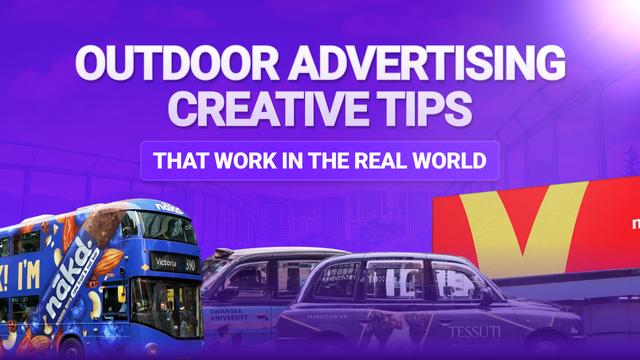
Outdoor Advertising Creative Tips (That Work in the Real World)
Outdoor advertising lives in a fast, distracting world where people are driving, walking, or rushing to catch trains. With only seconds to make an impact before the moment is gone forever, waste is a real concern. Avoid it by following proven design principles that work in real-world conditions.
Let’s talk about how to create outdoor ads that actually get noticed and remembered — even in busy, chaotic environments.
Master the 3-5 Second Rule
You have 3 to 5 seconds to communicate your entire message. That's it. People aren't stopping to study your billboard or carefully reading your bus ad. They're glancing while doing something else, so your message needs to be instantly clear.
This means one clear idea per ad. Not two ideas, not three benefits, not a complex offer with multiple conditions. Pick the single most important thing, the thing everyone needs to know. Build everything around that.
Your headline should be 6 words or fewer. Anything longer gets ignored or misunderstood. "Save 50% This Weekend" works. "Save up to 50% on selected items this weekend only at participating locations" doesn't.
Think about what people can actually process while moving. A phone number? Not likely. A simple website like YourBrand.com? Maybe. A memorable tagline? Definitely. Design for the reality of how people encounter outdoor advertising… not how you wish they would.
Design for Distance and Speed
Big fonts aren't just better — they're essential. Your main headline should be readable from at least 100 feet away. For billboards, that means text heights of 18 inches or larger. For transit advertising, 6 to 8 inches minimum.
High contrast saves your message. Black text on white backgrounds, white text on dark backgrounds — bright colors on contrasting backgrounds even. Subtlety is where messages go to die: they’ll disappear in bright sunlight or at night.
Simple beats clever. Yes, every time. One large image. One clear headline. One obvious call-to-action. At distance and speed, complexity gets ignored.
Let’s talk
Book a call with our team today!