Let’s talk
Book a call with our team today!

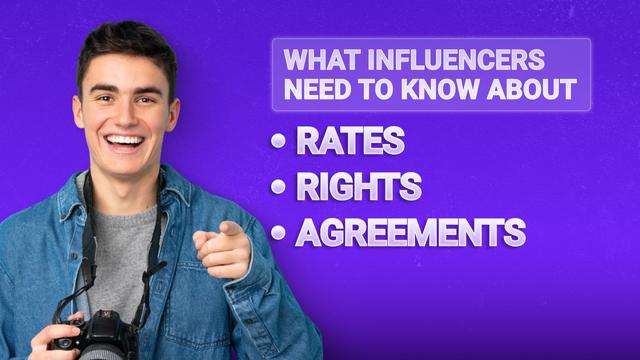
What Influencers Need to Know About Rates, Rights, and Agreements
Your content isn't just pretty pictures on Instagram – even though they are pretty. It's intellectual property with real value. If you're not protecting that value, you're leaving money on the table.
Here's what you need to know before you agree to anything.
How Your Rates Should Actually Be Calculated
Most creators guess at their rates or copy what someone else charges. That's a mistake. Your rate depends on four factors – audience size, engagement, niche, and what brands want with your content.
A fitness creator with 100,000 engaged followers charges more than a general lifestyle creator with the same numbers because fitness has higher commercial value. Tech reviewers charge premium rates because their audience has buying power.
But here's what most creators miss – usage matters more than follower count. A single Instagram post that stays up 30 days is worth less than the same post brands use in ads for six months.
Understanding Different Types of Usage Rights
Organic usage means your post lives on your feed and that's it. This is your baseline rate. Paid usage means brands can promote your post as an ad, reaching beyond your followers. That should cost 50-100% more.
Then there's licensing and whitelisting. Licensing means they can use your content in marketing materials – think websites, email campaigns, print ads. Whitelisting means they can run ads from your account that look like they're from you, but they pay for reach.
Each of these factors can significantly increase your rate. A post that costs $2,000 for organic usage might be worth $8,000 if it includes licensing rights.
Let’s talk
Book a call with our team today!